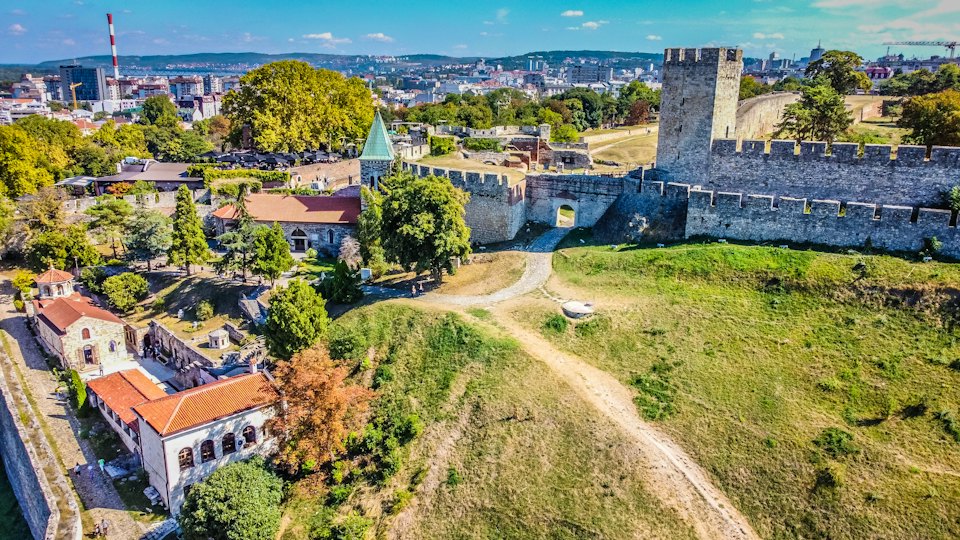
Signing a power of attorney abroad for use in Serbia
You can sign a power of attorney for Serbia without travelling here. Have your signature certified at a Serbian embassy or consulate, or by a notary where you live, followed by an apostille or legalisation where that country requires it. What decides whether the document works is less the stamp than the wording: it has to name exactly what your representative may do.
 Author: Srđan Bogićević, attorney at law, founder · Law checked:
Three ways to certify your signature
The first is a Serbian embassy or consulate. You sign in front of the consular officer, who certifies the signature. Consulates usually work by appointment and ask for a valid Serbian passport or ID card, and you bring the document unsigned. The Hague Apostille Convention does not apply to documents executed by diplomatic or consular agents, so a consular certification needs no apostille. It is a Serbian authority speaking.
The second is a local notary. The notary certifies your signature, and an apostille is then added by the authority that the country of the notary has designated. Under the Convention the apostille is the only formality Serbia can ask for. Serbia also has bilateral treaties with a number of countries, among them Italy, Austria, Croatia, Hungary and Slovenia, that exempt documents from certification altogether. Whether a treaty covers a power of attorney is checked country by country.
The third is full legalisation, for countries that have not joined the Apostille Convention. The United Arab Emirates is one of them. The document then goes through the foreign ministry of that country and the Serbian embassy, which takes longer. If you live in Dubai or Abu Dhabi and hold a Serbian passport, the Serbian embassy is usually the shorter route.

What Serbian law expects from the document
Serbian contract law has a simple rule: the form the law prescribes for a contract also applies to a power of attorney to conclude it. A sale of real estate must be made as a deed solemnised by a Serbian notary. For a power of attorney to sign such a contract, it is enough that your signature is certified. You do not need a solemnised deed yourself.
A general power of attorney covers only ordinary business. Anything beyond that needs specific authority. The law lists acts a representative can never do without authority for each individual case: taking on a bill of exchange, giving a guarantee, settling, agreeing on a court or arbitration, and giving up a right without payment. In practice, notaries and the cadastre also expect a sale or mortgage of real estate to be named expressly, with the property identified.
- your full name, date of birth, passport number and address, and your Serbian personal number (JMBG) if you have one
- the same details for the person you appoint
- the exact task: selling a named flat, handling probate, a court case, a tax matter
- for real estate: address, parcel number, cadastral municipality and unit number
- who may receive money, if anyone, and into which account
- whether the representative may appoint someone else in turn
Court cases and divorce
In civil litigation, a private individual can be represented by a lawyer, or by a blood relative in the direct line, a brother, a sister or a spouse. A friend or a colleague cannot represent you in court.
Divorce has a stricter rule. A power of attorney to file for divorce must be certified and must be issued only for representation in that marital dispute. A general power of attorney, however broad, will not do.
Describe it in a few sentences, or send the document on WhatsApp. Within 24 hours on working days you get a reply on whether and how we can help.
Language and translation
Serbian notaries, courts and the cadastre work in Serbian. A power of attorney signed at a consulate is normally drafted in Serbian from the start. One signed before a foreign notary in another language is translated in Serbia by a court interpreter, and the apostille is translated with it.
A bilingual document, with Serbian and the local language side by side, often makes life easier for the foreign notary, who can see what you are signing. Even then, ask us before you sign whether the Serbian institution will want a separate certified translation.
Revoking it, and when it ends
You can narrow or revoke a power of attorney at any time, even if you promised not to. No special form is needed. Tell your representative and the institution where the document was filed. A third party who did business with your representative without knowing, and without having to know, about the revocation is protected, so tell people early.
A power of attorney ends when the representative dies. It also ends on your death, unless the work already started cannot be stopped without harm to your heirs, or the document says it continues after death. Some notaries and banks prefer a recent document, so for a single transaction we usually suggest a power of attorney limited to that task.
How we usually work
We draft the text for your case and send it to you before you book the consulate or notary, so that names and numbers are checked while changes are still free and easy. You certify one original and send it by courier. Certified copies, if several institutions need one, can then be made by a notary in Serbia.
While the original is on its way, a few preparatory steps, such as ordering records, can sometimes start on the basis of a signed scan. We say in advance which steps those are.
Frequently asked questions
Does a power of attorney signed at a Serbian consulate need an apostille?
No. The Apostille Convention does not apply to documents executed by diplomatic or consular agents. A signature certified by a Serbian consulate is used in Serbia as it is.
Can I sign a power of attorney for Serbia before a notary in my country?
Yes. The notary certifies your signature and, if your country is a party to the Apostille Convention, an apostille is added there. Countries outside the Convention, such as the UAE, require legalisation instead, unless a bilateral treaty applies.
Is a general power of attorney enough to sell a flat in Serbia?
No. The sale has to be expressly authorised, with the property identified, and the signature on the power of attorney must be certified.
Who can represent me in a Serbian court?
A lawyer, or a blood relative in the direct line, a brother, a sister or your spouse. For divorce, the power of attorney must be certified and issued only for that case.
Does my power of attorney need to be translated?
If it is not in Serbian, yes. The translation is made by a court interpreter in Serbia, and the apostille is translated too.
Can I revoke a power of attorney from abroad?
Yes, at any time and without a special form. Inform your representative and the institutions that hold the document.
This guide provides general information and is not legal advice for your specific case. Send us your question for an assessment.
Talk to a lawyer
Describe your case in a few sentences. We reply within 24 hours on working days and tell you whether and how we can help.
- We read your description and any documents you sent.
- Within 24 hours on working days we reply with an assessment and the next step.
- If you want us to proceed, we send a written offer.
- srdjan@bogiceviclaw.com
- +381 65 678 4991
- Viber
- +381 63 104 9891